9 Living Room Furniture Ideas
Your living room has to do a lot. It's the place where you watch TV, read, catch up with your family, work from the sofa or have friends round. Choosing furniture that suits the way you live rather than copying a showroom layout, will make the room much more useful.
At eFurn, we know a good living room needs more than furniture that looks right. These nine ideas can help you shape your room so it feels like yours and works for you.
1- Choose the sofa before anything else
Your sofa will usually set the direction for the room. Measure the wall or area where it will sit, but check the route into your home too. A sofa may suit the space perfectly yet still cause you problems if you can't get it through the hall or doorway.
Think about how you want to use it. A corner sofa gives you room to stretch out and seats several people. A compact two seater is better for a smaller room, especially if you want an armchair or side table as well.
2 - A place to put your drink
A coffee table gives you a place for mugs, remotes, magazines and other things that otherwise end up on your sofa. You don't need a huge table. Check the gap between your sofa and TV unit and choose one that gives you enough room to stand up and move about. A coffee table with a shelf or drawer is also handy for storing things you're currently using.
3 - Use a TV unit to hide the clutter
Televisions bring cables, controllers, games consoles and boxes with them. A TV unit gives you a place to store them and stops the area underneath looking messy. Open shelves suit equipment that needs ventilation, and cupboards and drawers let you hide away the things you'd rather not see.
Check the width of your television before you choose a stand. Think about how you'll access plug sockets and cables too. The right unit will make the TV look like part of your room rather than something you've squeezed in.
4 - Consider buying an armchair
When you need another seat, an armchair gives you more freedom than a second sofa. You can angle it towards the main seating area, put it beside a window or create a cosy reading spot with a lamp and small table. It doesn't need to match your sofa exactly, in fact, a different texture or colour can stop your room feeling too planned. Choose something that works with your existing furniture.
5 - Get a sideboard to hide things away
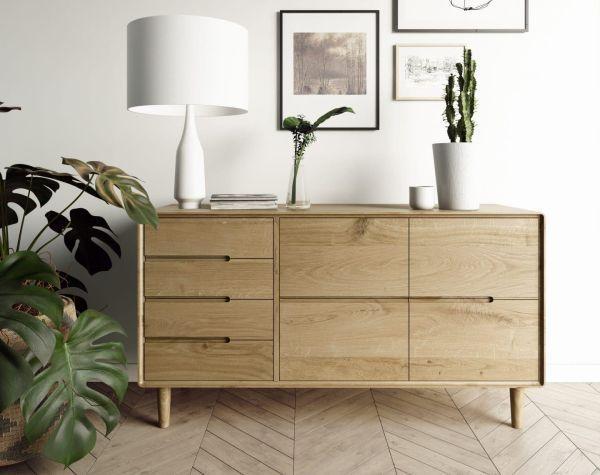
A sideboard is great for hiding away the things you need but don't want on show. Board games, paperwork, chargers and throws can all go behind closed doors. It's particularly useful in a busy family room, where surfaces can quickly get cluttered.
It's easy to make the top of the sideboard look attractive. A lamp, photos or a plant will make it feel part of the room. If you've got a long blank wall, a sideboard gives you extra storage and won't make the room feel closed in.
6 - Turn shelves into a feature
Bookcases and display units let you show more of your personality. You might use yours for books, records, photographs, plants or objects you have collected over time. They're good for awkward corners where a larger cabinet would feel too bulky.
Don't pack every shelf from edge to edge. Mix up taller books with smaller objects and leave some breathing room. Your shelving will look more relaxed, and it'll be easier to find what you need.
7 - Use smaller tables where you sit down
A side table next to your sofa or armchair is a good idea. It's somewhere you can put a drink, a phone or a book instead of balancing everything on the arm of a chair. Nesting tables are great for when you want flexibility. You can pull them apart when you've got people round, then tuck them back in together again.
8 - Let storage solve the mess before it starts
It is much easier to keep your living room tidy when regular items have a home. Storage units, cabinets and ottomans can help with toys, blankets, hobby supplies and everything else that gathers in the room.
Think about what ends up on your floor or coffee table and that will give you a good idea of what storage you need. If throws and cushions keep appearing, a storage ottoman may help. If paperwork keeps piling up, you'll get more use from a sideboard with drawers.
9 - Leave room for the way you move about the room
Before you settle on a layout, walk through it in your mind. Can you get from the door to the sofa easily and will you be able to open the drawers and cupboards? Will you need to weave around furniture when you're carrying a cup of tea or glass of wine?
You don't need to push every piece of furniture against the wall. If you pull your sofa or chair slightly forward, it will make your room feel more comfortable and give the seating area more shape. When your room feels easy to use, it will feel more comfortable too.