How Do I Choose the Best Home Office Furniture?
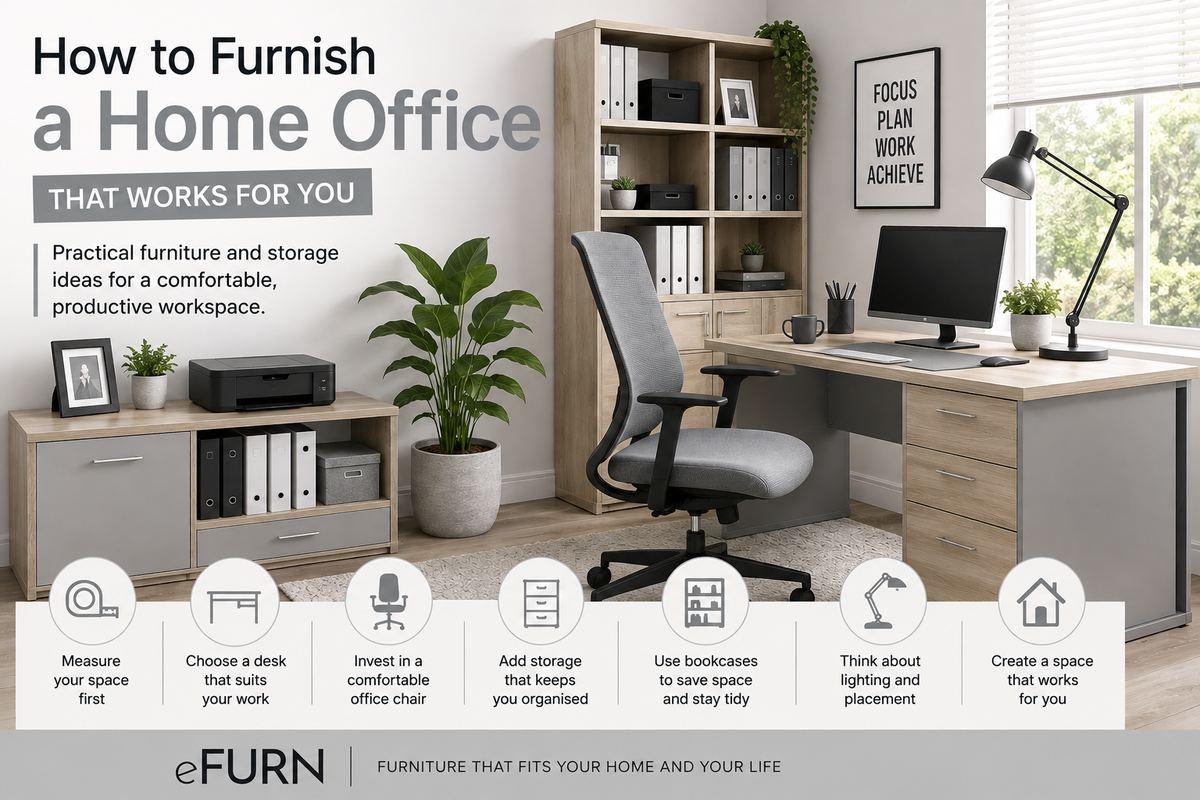
Working from home is much easier when you have a comfortable place to sit, enough room for everything you need and storage that stops paperwork taking over the house. The right furniture can make even a fairly small home office work well. Before buying anything, think about how you actually work. Someone who uses a laptop for a few hours each week needs a very different setup from someone who works from home full-time with two monitors, paperwork and other equipment.
Measure your home office first
Start by measuring the space rather than choosing furniture and hoping it fits. Check the width and depth of the room and note where doors, windows, radiators and plug sockets sit. Remember that you need space to move around too. A desk might technically fit between two walls, but it won't be much use if you can't pull your chair back comfortably. If you're furnishing part of a bedroom or living room, consider how much space the office can take without interfering with the room's main purpose.
Choose a desk that suits your work
Your desk will usually be the starting point for your home office. Size matters, but bigger isn't automatically better. If you mainly work from a laptop, a compact desk may give you everything you need while taking up relatively little room. If you use monitors, notebooks, documents or other equipment throughout the day, you'll probably appreciate a larger work surface.
Think about storage at this stage as well. A desk with drawers or cupboards can keep stationery and paperwork nearby. At eFurn, our range of office desks includes different sizes and styles, making it easier for you to find something suitable.
Give your office chair some thought
It's easy to spend most of your budget on a desk and treat the chair as an afterthought. If you regularly work from home, however, you'll potentially spend hours sitting in it each day. Look for an office chair that supports you comfortably and works with the height of your desk. Features such as adjustable seat height can help you find a better working position.
Plan where everything will go
A tidy home office isn't necessarily one with very little in it. It's one where everything you regularly use has somewhere sensible to go. Before choosing office storage, make a quick list of what you need to keep in the room. That could include paperwork, stationery, books, folders, printer supplies and computer equipment. Once you know what you need to store, you can choose furniture that fits the job.
Add storage without overcrowding the room
Office storage units can help you keep your work area organised, but consider the proportions of the room. Several large pieces of furniture can quickly make a small office feel cramped. A filing cabinet can work well if you still keep paper records, while a printer cabinet gives larger equipment a dedicated home. Drawers and cupboards are useful for items you don't want permanently on display. If floor space is limited, taller storage can help you make better use of the room's height.
Consider a bookcase
Bookcases aren't only useful if your work involves shelves full of books. They can provide flexible office storage for folders, reference materials, boxes and equipment you want within easy reach. Open shelving also makes it easy to see what you have. Use boxes or baskets on some shelves if you need somewhere for smaller items that would otherwise make the room look cluttered.
We stock bookcases in different sizes, including narrower designs that can work particularly well where you have an unused section of wall but limited floor space.
Think about where your furniture will sit
Furniture placement can make a surprising difference to how pleasant your office is to use. Natural light is useful, but placing a computer screen directly opposite a bright window can cause glare. Sitting with a window immediately behind you may create reflections on your screen instead.
Also check where your plug sockets are before deciding on the final position of your desk. Keeping your computer, monitor and other electrical equipment reasonably close to sockets can reduce the number of extension leads and cables running around the room.
Choose furniture that works with the rest of your home
A home office is still part of your home, so you don't have to make it look like a conventional workplace. Consider furniture that works with the style and finish of the surrounding room, particularly if your office occupies part of a bedroom, dining room or living area. Matching or complementary pieces can help the workspace feel like it belongs there.
If you have a separate office, you have more freedom, but choosing desks, bookcases and storage from complementary ranges can still give the room a more coherent appearance.
Don't forget about cables and equipment
Computer cables, chargers and extension leads can quickly make a newly furnished office look untidy. Position frequently used devices where you can reach them without stretching. Printers and equipment you use less often can sit elsewhere, freeing valuable desk space for the things you need throughout the working day.
Buy for the way you work now
It's tempting to create a home office around an idea of how you think you should work. In practice, the best furniture is the furniture that suits your real working habits. Start with the essentials and consider how much space you genuinely need. A suitable desk and comfortable office chair may be enough initially, with bookcases, filing cabinets and other office storage added where necessary.
At eFurn, we offer a range of home office furniture to help you put together a practical workspace, whether you have a dedicated office or you're making use of a smaller area elsewhere in your home. Choosing each piece with your available space and working routine in mind will help you create an office that you can comfortably use day after day.